A life of service.
A science of progress.
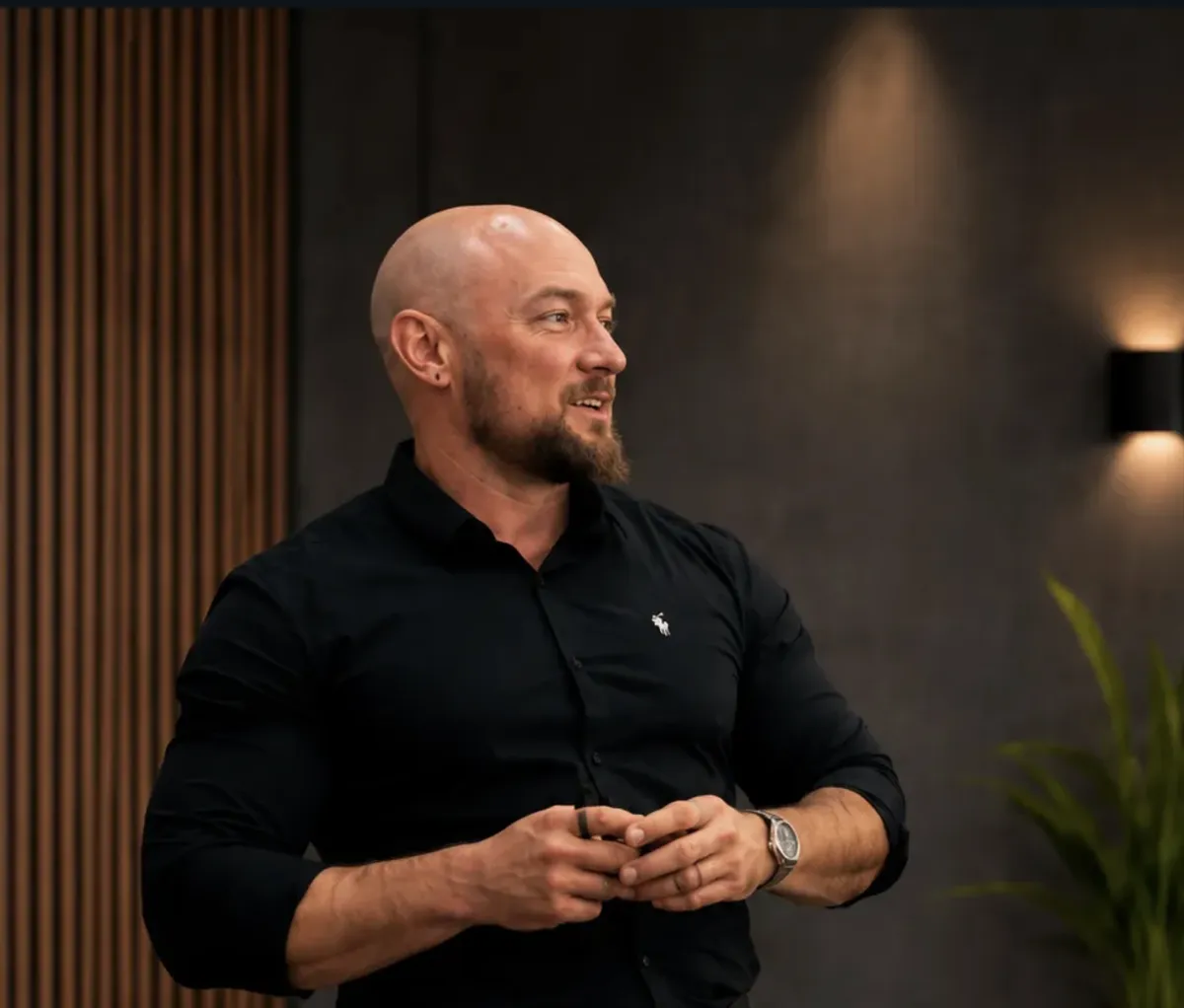
Veteran. Exercise physiologist. Educator. Researcher. I bring military experience and applied science together to help you build strength, resilience, recovery, and long-term vitality.
THE STORY BEHIND PEAK VITALITY
Experience that connects the science to real life.
Peak Vitality is the professional expression of my life’s work in military readiness, exercise physiology, health promotion, research, and human performance.
My Army service began in 2006 and included deployment in support of Operation Iraqi Freedom. Those experiences shaped how I understand the physical and mental demands of service—and the importance of readiness, resilience, and leadership.
Today, my work connects that operational perspective with research, teaching, and evidence-based coaching. The goal is practical: help people and organizations improve performance, recovery, and long-term health.
THE PERSPECTIVE I BRING
Research. Readiness. Real-world coaching.
01 / APPLIED EXPERIENCE
Military & human performance
Experience spanning Army service, wellness centers, federal health promotion, and tactical readiness.
02 / RESEARCH
Recovery & resilience
Doctoral research exploring breathwork, heart rate variability, and autonomic recovery following maximal exertion.
03 / EDUCATION
Making science useful
Teaching, curriculum design, mentorship, and coaching that connect exercise science with everyday practice.
PROFESSIONAL BACKGROUND
A closer look at the work.
PhD in Leadership with an emphasis in Health and Human Performance, Concordia University Chicago. Explore the experience, education, research, and service behind Peak Vitality.
Professional experience
10+ years military & tactical experience | 500+ satisfied clients
Tactical Human Performance SME & Co-Lead, CHPR Research
Defense Health Agency, Clinical Health Promotion & Readiness | 2025-Present
Serves as a tactical human performance subject matter expert supporting enterprise-level research, evaluation, and readiness strategy across the Military Health System. This role focuses on research integration, data governance, program evaluation, performance metrics, and translating operational health data into actionable insights for leadership and readiness decision-making.
Project Officer / Health Education Manager
Armed Forces Wellness Centers | 2023-2025
Supported enterprise-wide planning, evaluation, and implementation of human performance and health promotion initiatives across Armed Forces Wellness Centers. Responsibilities included program evaluation, analytics, readiness reporting, collaboration with site leaders, and integration of physiological and psychological performance strategies for tactical populations.
Hormone Health Consultant
Recalibrate MED | 2022-Present
Provides evidence-based hormone, wellness, and performance education for individuals seeking improved health, body composition, recovery, and longevity. This role includes intake review, lifestyle strategy, functional lab interpretation support, nutrition guidance, training alignment, and personalized wellness planning.
Adjunct Instructor
American Public University System / American Military University | 2024-Present
Teaches undergraduate courses in sports and health sciences, exercise programming, strength and conditioning, business aspects of fitness and wellness, current issues in health sciences, and senior seminar coursework. This role blends academic instruction with applied experience in human performance, coaching, wellness, and exercise science.
Adjunct Instructor & Course Designer
Maryville University | 2022-Present
Teaches and designs exercise science coursework in areas such as tactical strength and conditioning, exercise physiology, stress management, tactical performance optimization, advanced exercise physiology, and research design. This role focuses on connecting scientific principles with real-world human performance and health promotion practice.
Supervisory Health Educator / Director
Army Wellness Center | 2019-2023
Directed Army Wellness Center operations supporting Soldier readiness, health promotion, body composition, metabolic testing, stress management, and performance optimization. Led teams, managed budgets and equipment, developed SOPs and competency training, supported H2F integration, and used program evaluation data to inform readiness and health outcomes.
Health Educator
Army Wellness Center | 2018-2019
Delivered health assessments, metabolic testing, exercise testing, nutrition education, stress management, and individualized exercise recommendations for military populations. Supported unit education, community outreach, and performance-focused initiatives designed to improve readiness, wellness, and sustainable behavior change.
Health Promotion Technician
Army Wellness Center | 2016-2018
Supported delivery of Army Wellness Center classes, health education, client documentation, equipment management, marketing, and program data entry. This role served as a foundation in frontline health promotion, teaching, wellness coaching, and operational support within military health settings.
Instructor / Victim Advocate / Operations NCO
U.S. Army Corrections School | 2012-2016
Served as an Army instructor and operations leader responsible for training Soldiers in military corrections, detainee operations, emergency procedures, communication, use of restraints, weapons qualification, and field training exercises. Also served in collateral roles supporting prevention, advocacy, and unit-level operational readiness.
Squad Leader / Watch Commander / Assistant Watch Commander (31E)
189th MP Company, Guantanamo Bay, Cuba | 2011-2012
Led Soldiers in a strategic detention facility environment while maintaining accountability, operational discipline, and facility security. Responsibilities included supervision, Soldier development, sensitive item accountability, and watch operations in support of overseas mission requirements.
Soldier: US Army Engineer (12W/12R) / PSD Team Member
U.S. Army | 2006-2011
Began my military career as a Soldier serving in combat engineering and personal security detachment roles, including time as a .50 caliber machine gunner. During this period, I deployed in support of Operation Iraqi Freedom OCT2007-DEC2008, where I gained firsthand experience in tactical operations, convoy security, mission readiness, and the physical and mental demands placed on service members in deployed environments.
This early military experience shaped my understanding of tactical readiness, resilience, leadership, and occupational performance, forming the foundation for my later work in human performance, health promotion, and tactical athlete development.
Education & academic training
20+ courses taught & designed
PhD in Leadership: Health and Human Performance
Concordia University Chicago | 2026
Completed a PhD in Leadership with an emphasis in Health and Human Performance at Concordia University Chicago. Dissertation research focused on heart rate variability, heart rate recovery, body composition, VO₂max, and acute breathwork interventions following peak exertion in tactical athletes.
Master's Degree in Sports and Health Sciences
American Military University | 2019
Completed graduate-level study with a concentration in Human Performance. Academic work emphasized exercise physiology, sport psychology, research methods, statistics, nutrition, biomechanics, strength and conditioning, and optimal performance.
Bachelor's Degree in Sports and Health Sciences
American Military University | 2017
Completed undergraduate training in Sports and Health Sciences with a minor in Exercise Science. Coursework provided the foundation for later work in anatomy and physiology, kinesiology, exercise physiology, nutrition, biomechanics, therapeutic exercise, and sport conditioning.
Publications & presentations
3 research articles published*
Parasympathetic reactivation following maximal exercise: Influence of breathwork and body composition in ROTC cadets. Journal of Exercise and Nutrition, 9(1).
Introduction: Autonomic recovery is critical for tactical readiness. While structured breathwork enhances parasympathetic reactivation, it is unclear whether body composition indices such as percent body fat (%BF) or fat-free mass index (FFMI) influence acute recovery following maximal exertion. This study examined whether %BF or FFMI moderate post-exercise autonomic recovery in ROTC cadets.
Methods: Fifty-two cadets (age 20.0 ± 3 yrs; %BF 28.5 ± 7.7; FFMI 18.4 ± 2.8) completed a maximal rowing test and were randomized to box breathing (BB, n = 19), cyclic sighing (CS, n = 17), or spontaneous breathing (SB, n = 16) during a 3-min active recovery. HF-HRV was measured at baseline, 1-3 min, and 4-6 min post-exercise. HRR was calculated at 1 and 3 min. Repeated-measures MANOVA and %BF- and FFMI-adjusted MANCOVA were performed.
Results: A significant main effect of time was observed for HF-HRV (Pillai's Trace = .934, F(2,48) = 339.86, p < .001). The Time × Group interaction reached significance in the FFMI-adjusted model (Pillai's Trace = .190, F(4,96) = 2.52, p = .046). Time × %BF and Time × FFMI interactions were non-significant (p ≥ .271). Regression analyses showed BB and CS predicted higher HF-HRV at Post1 (R² = .193) and Post2 (R² = .224; p ≤ .017), whereas %BF and FFMI were not significant predictors. HRR demonstrated a main effect of time (p < .001) without group or body composition effects.
Conclusions: Structured breathwork enhanced post-exercise parasympathetic reactivation independent of %BF and FFMI. Body composition did not significantly influence acute autonomic recovery in this cohort.
Read publication ↗
Effectiveness of structured breathwork interventions on heart rate variability and heart rate recovery following maximal exertion in tactical athletes. Medicine & Science in Sports & Exercise, 58(7), 1524-1533.
Purpose: This study investigated the acute effects of two structured breathwork methods on autonomic recovery following maximal exertion.
Materials and Methods: A randomized control trial was conducted with 62 cadets (44 males and 18 females) assigned to three distinct groups: box breathing (BB), cyclic sighing (CS), or spontaneous breathing control. Participants performed a graded exercise test to assess maximal oxygen consumption (VO2). High-frequency heart rate variability (HF-HRV) and heart rate recovery (HRR) were collected to evaluate autonomic recovery and parasympathetic reactivation. HF-HRV was analyzed at three time points: baseline (Pre), 1-3-min postexercise recovery (Post1), and 4-6-min postexercise (Post2). HRR was measured at 1- and 3-min intervals, analyzing reductions from peak heart rate captured at VO2max. All analyses were evaluated using a 3 (group) × 3 (time) mixed-design repeated-measures analysis of variance.
Results: All groups were comparable in age, weight, height, and body mass index (21 ± 3 yr; 77.4 ± 15.4 kg; 173.1 ± 9.0 cm; 25.7 ± 4.0 kg·m−2, respectively). HF-HRV revealed significant main effects for time (F(2,118) = 465.01, P < 0.001, η2=0.89), group (F(2,59) = 8.20, P < 0.001, η2=0.22), and time × group interaction (F(4,118) = 3.54, P = 0.009, η2=0.21). Both the CS and BB groups had greater increases in HF-HRV from Post1 to Post2 when compared to spontaneous breathing (P = 0.001). HRR improved across all participants from 1- to 3-min postexercise with no group level differences (F(1,59) = 33.51, P < 0.001, η2=0.36).
Conclusions: Structured breathwork following maximal exertion significantly accelerated parasympathetic reactivation as reflected by HF-HRV. Both BB and CS offer a simple field-ready intervention aimed to enhance operational readiness for tactical populations through enhancing acute physiological recovery.
Read publication ↗
Master's Capstone Publication: Tactical Athlete's Body Composition and Performance Effects While Training in a Fasted State
Body composition and performance has long been components analyzed in tactical athletes within organizations assessing rates of obesity and their ability to perform duties. Many times, individuals within these organizations fall short of the standards set forth. Multiple methods of decreasing body composition and increasing performance present when tactical athletes fall out of regulations. Tactical athletes train at high intensities and most of the time for long durations. Thus, fad diets such as caloric deficits and Intermittent Fasting (IF) were investigated to decide if training in a fasted state improved performance or assisted in decreasing body composition. The research method I used was a search of literature relating to IF, calorie deficits and military caloric expenditure. The search yielded multiple sources related to body composition and performance, although selected articles closely related to tactical athletes and training methods commonly used. The findings of the study presented that fasted training at low intensities does improve body composition, while high intensities don't improve either body composition or performance. Conclusions showed tactical athletes can perform fasted training, although high and low intensities must be varied to accommodate the energy intake for best results, resulting in the need for adequate training on this topic.
Mentorship, service & leadership
Doctoral Dissertation Committee Chair & Member
Concordia University, St. Paul | Current
Serve on doctoral dissertation committees supporting emerging scholars through the research process, including topic refinement, research design, methodology alignment, scholarly writing, data interpretation, and dissertation defense preparation. Currently chairing two doctoral dissertation committees and serving as a committee member for two additional doctoral students, with a focus on helping students develop rigorous, applied, and professionally relevant research.
Graduate Thesis Mentor
Georgia Southern University | Master's Thesis Support
Provided graduate-level mentorship for a thesis project examining the impact of tactical breathing on marksmanship and cognitive function following aerobic fatigue in law enforcement personnel.
Internship Preceptor
Womack Army Medical Center | 2022
Served as a preceptor for Exercise & Sport Science and Public Health Nutrition students, helping emerging professionals transition from academic preparation into applied practice within health promotion and human performance settings.
ACSM Exercise Physiologist Subcommittee Co-Chair
American College of Sports Medicine | 2026-Present
Serve as Co-Chair for the ACSM CCRB Exercise Physiologist Subcommittee, supporting certification exam development, role delineation, blueprint review, item writing, passing standards, and professional credentialing oversight.
ACSM Committee Member
American College of Sports Medicine | 2023-2026
Served on the ACSM CCRB Exercise Physiologist Subcommittee, contributing to certification exam development, item review, professional standards, and the evaluation of exercise physiologist knowledge, skills, and abilities.
Tactical Strength & Conditioning SME Panel
National Strength and Conditioning Association | 2024-2025
Served as a subject matter expert supporting the development of sample test questions and study material for the Tactical Strength and Conditioning certification area.
Industry Advisory Council Member
American Public University System / American Military University | 2019-2023
Served as an advisory council member supporting curriculum discussions, policy review, student and faculty growth, and program development within sports and health sciences.
Put the science to work for you.
Explore coaching built around your goals, your physiology, and your everyday life.
PEAK VITALITY
CONSULTING
Performance. Health. Longevity.
Copyrights 2026 | Peak Vitality Consulting™ | Terms & Conditions